For Students and Families
Emergency Care Careers
A practical guide to EMT, paramedic, firefighter, 911 telecommunications, nursing, and emergency medicine careers for students in northeast Colorado. What these careers are, what they take, and how to get there from here.
Looking for open positions in the region? Visit our Regional Job Board ›
What This Work Is Really About
Emergency care and public safety careers exist because communities need people who can respond well when something goes wrong. Across all of these roles, the most valued qualities are steadiness, clinical skill, good judgment, and the ability to care for people under pressure.
❤
Kindness
Treating people well on their worst days
⚙
Clinical Skill
Science-based decisions under pressure
💬
Communication
With patients, families, and care teams
🎯
Discipline
Consistent performance, not just peak moments
🤝
Teamwork
Rarely alone; always part of a system
🏠
Service
Showing up for your community, consistently
These careers can include high-stakes moments. More often they include long shifts, routine calls, paperwork, emotional weight, and the satisfaction of doing something useful in your community every single day. People who understand that going in tend to build longer, more meaningful careers.
The Careers
These careers overlap in real ways. Many paramedics work in hospitals. Many nurses work in the field. Many emergency physicians started as EMTs. The 911 dispatcher is the first person a patient talks to and often the one coordinating everything that follows. Think of the groups as entry points, not walls.
Group A: Prehospital, Field, and Dispatch Careers
Group B: Hospital Emergency Careers
Group C: Advanced, Specialized, and Expanded Roles
Paramedicine is a multidimensional profession. Paramedics practice across emergency and primary care, in-hospital and community settings, and in non-clinical roles including education, leadership, policy, public health, and research. The specialty certifications below reflect that breadth. Each builds on the base paramedic or nursing credential and requires additional training and certification.
Paramedic specialties are certified by IBSC (International Board of Specialty Certifications). Nursing specialties are certified by BCEN (Board of Certification for Emergency Nursing).

FP-C — Flight Paramedic Certified
Critical care in helicopter or fixed-wing aircraft. Requires significant field experience plus FP-C credentials.

CCP-C — Critical Care Paramedic Certified
High-acuity interfacility transport, often alongside a critical care nurse. Bridges standard EMS and intensive care during transport.

CP-C — Community Paramedic Certified
Mobile integrated healthcare. In-home patient management to reduce unnecessary ER use. A growing role in rural Colorado.

TP-C — Tactical Paramedic Certified
Integrated with law enforcement SWAT teams. Cares for victims, officers, and K-9 partners during high-risk incidents.

WPC — Wilderness Paramedic Certified
Emergency care in remote and backcountry environments. Relevant in mountain rescue and search-and-rescue operations, especially in Jackson and Larimer counties.
Hospital-Based Paramedic
Works inside hospital EDs, procedural areas, and critical care units alongside nursing and medical staff. No additional specialty certification required beyond paramedic licensure.

CEN — Certified Emergency Nurse
Core emergency nursing certification. Required or preferred by most ER employers. The benchmark credential in emergency nursing.

CPEN — Certified Pediatric Emergency Nurse
Specialty certification for nurses working in pediatric emergency departments and pediatric trauma care.

TCRN — Trauma Certified Registered Nurse
Specialty for nurses working in trauma centers, trauma bays, and trauma resuscitation teams.

CFRN — Certified Flight Registered Nurse
Flight nursing on helicopter and fixed-wing aircraft. Works alongside flight paramedics in air medical transport.

CTRN — Certified Transport Registered Nurse
Critical care ground transport nursing. Manages complex patients during interfacility transport alongside transport paramedics.

CBRN — Certified Burns Registered Nurse
Specialty nursing in burn units and combined trauma-burn centers.
Expanded Practice
Nurse Practitioner (NP) — Emergency
Advanced practice nurse who independently diagnoses, treats, and prescribes in emergency and urgent care settings. Requires BSN plus a graduate NP program. UNC Greeley and CU Anschutz both offer NP programs.
Expanded Practice
Physician Assistant (PA) — Emergency
Works in emergency departments with significant clinical independence. Graduate-level program (approximately 3 years). Prior experience as an EMT or paramedic is a strong advantage. UNC Greeley and CU Anschutz offer PA programs.
Education and Leadership
EMS Educator / Program Director
Teaches EMT and paramedic programs at community colleges or agency training centers. Requires paramedic certification, field experience, and often an educator certification or degree.
Career Comparison at a Glance
Cost ranges reflect Colorado community college tuition as of 2025-2026. University and medical school costs reflect national averages. Use these as planning ranges, not precise figures.
From the Field
Working providers in northeast Colorado, in their own words.
“Desire to learn brought me into the nursing field and kept me growing. The ability to help others because of what I learned through that journey is what gives me a sense of value and personal reward.”
Alli Lackey
Flight RN — Banner Med Evac
“There is nothing more rewarding than being invited to be a part of pivotal moments in the lives of others and to have their trust to help them in those moments. EMS is not all about flashing lights, sirens, and life or death moments, although we have those too. It is about upholding the trust that our fellow community members put in us, continuously learning and improving the care we provide, and caring for everyone we encounter with compassion and skill. I could not imagine a better way to spend a career.”
James Robinson
Chief — Thompson Valley EMS, Larimer County
“I started because it was exciting and I wanted to serve. I stayed because this job is the most rewarding career I could have never imagined. Best job in the world!”
Paul Johnson
Division Chief of EMS — Mountain View Fire Rescue
“The most important tool you carry isn’t in your trauma bag; it’s in your heart and mind. Treat every patient, especially those the world has turned its back on, with the same dignity you would give your own loved one. Holding someone’s hand is sometimes the most powerful thing you can do, not only for them, but for you.”
Joe Darmofal
Program Director — Med Evac
“EMS, especially while in college or high school, is a unique way to get experience and hours needed for PA and medical school programs, in addition to being part of a community serving their communities. I entered this career field as a volunteer firefighter, and found it rather fascinating. This field is what you make of it. Enjoy the ride, learn, stay hungry, and be humble.”
Julianne Matics
Paramedic — UCHealth EMS, Weld County
2 Minutes
Not sure which career fits you?
Answer 6 honest questions and get a personalized result with a recommended pathway and next steps for northeast Colorado.
See the Work
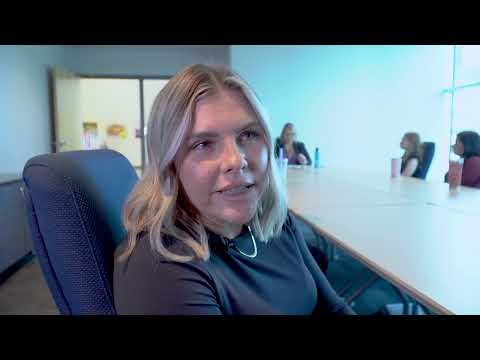
Hearing from people who actually do these jobs is more useful than any description. Click any card to watch on YouTube.


Colorado Pathways and Resources
Every career on this page has a starting point you can reach from northeast Colorado. These are real programs, real funding sources, and real access pathways for students in this region.
EMS and Paramedic Programs
Front Range Community College
Larimer and Weld counties. EMT certificate, Paramedic AAS, Fire Science AAS, and Nursing ADN.
Morgan Community College
Fort Morgan. EMT and EMS programs directly in the NCRETAC region.
Northeastern Junior College
Sterling, Logan County. EMT training and health sciences programs.
Nursing, Pre-Med, PA, and NP Programs
University of Northern Colorado
Greeley. BSN Nursing, pre-med, PA program, NP program, and the UNC School of Medicine serving rural and underserved Colorado.
Colorado State University
Fort Collins. Pre-med through Biomedical Sciences and Biology. Health and Human Sciences programs.
University of Colorado Anschutz
Aurora. CU School of Medicine, College of Nursing, PA program, and health sciences graduate programs.
Funding and Access
Colorado CREATE Grant
State funding through CDPHE supporting EMS training in rural and frontier Colorado. Directly relevant to students in Phillips, Sedgwick, Washington, Yuma, and Jackson counties.
College Opportunity Fund
State stipend reducing tuition for eligible Colorado students at public colleges and universities, including EMT and paramedic programs at Front Range, Aims, Morgan, and Northeastern.
Employer-Sponsored Training
Many EMS agencies in the region will hire applicants and sponsor EMT training or provide tuition reimbursement after certification. Contact your local EMS agency or county emergency manager.
Colorado Workforce Centers (WIOA)
Workforce Innovation and Opportunity Act funding can cover training costs for eligible students including EMS and healthcare programs. Ask your local Workforce Center about Youth Program eligibility.
Volunteer Opportunities in Northeast Colorado
Volunteering is one of the most effective ways to understand whether emergency care or dispatch is a good fit before committing to a training program. Rural volunteer fire and EMS departments exist throughout the NCRETAC region, particularly in Phillips, Sedgwick, Washington, Yuma, and Jackson counties. Many accept junior members aged 16 and older with parental consent and will support your training. Contact your local fire department or county emergency manager to ask about opportunities near you.
Professional Organizations and Certification Bodies
IBSC
International Board of Specialty Certifications. Issues FP-C, CCP-C, TP-C, CP-C, and CCEMT-P credentials for paramedic specialties.
BCEN
Board of Certification for Emergency Nursing. Issues CEN, CPEN, TCRN, CFRN, CTRN, and CBRN credentials for emergency nursing specialties.
American Paramedics
National professional organization for paramedics. Career resources and professional development.
EMS Association of Colorado (EMSAC)
Colorado’s statewide EMS professional organization. Locally relevant for students interested in the Colorado EMS workforce.
NAEMSE Foundation
Scholarship opportunities for EMS students through the National Association of EMS Educators.
Colorado Wage Data
Current county-level wage data for EMS, nursing, dispatch, and emergency medicine careers in Colorado.
Questions about emergency care careers in northeast Colorado? Contact the NCRETAC office and we will do our best to connect you with the right information or the right people in the region.
Contact NCRETAC ›
Training & Events ›
Regional Job Board ›
Take the Self-Assessment ›
Related: About NCRETAC | Community | Health & Wellness | Document Library